In what is sad news, Dalmatian winemaker, Alen Bibić of his eponymous Bibich Winery has died this week at the age of 53.
This comes shortly after the recent Vino Dalmacije fair in Split where they were honoring another Croatian winemaker, Zlatan Plenković who died 10 years previously.
Both Plenković and Bibić played important roles in the evolution of winemaking for the Dalmatian Coast of Croatia. Plenković was one of the first to pull the region out of the doldrums left by the collapse of the Yugoslavian winemaking regime. Bibić was one of the first from the region to export the wines in a serious manner from their place of origin and gain more recognition. Additionally, Bibić focused a tremendous amount of his time on growing the quality of the local grape varieties in Northern Dalmacija, especially the white, Debit
When I first met Bibić back in 2005, his wines provided a much needed spark for the importer I was working for who tended to favor only what he could source cheaply in the Balkan countries. Bibić was serious and business minded, telling me that his production was 90% export and 10% domestic in sales. This was a massive change for a producer in the region which firmly established his wines in the US. Even now, in the most-recent Dalmacija Report, it’s still the case that most wineries in the region are highly dependent upon local sales, so Bibić has remained an outlier.
Despite Bibić’s often ‘Balkan’ look in sporting a black leather jacket, lit cigarette, and driving a BMW, he was a Renaissance man, originally a professor of Croatian language and literature by profession before dedicating his life to renewing the family winery once the war ended. Additionally, he was always an amazing host and some of my fondest memories in Croatia have been at events that he hosted.
Even when working on what was the first English-language book about Dalmatian wines back in 2007, he welcomed me to a wine bar he’d opened in the village of Skradin with his friend, Ante, called Alante (Alen + Ante) and while the bar didn’t ultimately stay around, it embodied Bibić’s warmth of spirit and sharing his wines. Needless to say, it was an ‘interesting’ one-hour drive back to Split where I was staying.
All of this laid the groundwork for what would become the apex of fame for this Dalmatian winemaker from the village of Skradin, which was being featured on an episode of Anthony Bourdain’s No Reservations. Bibić and his wife, Vesna had opened a restaurant at their winery (something which the vast majority of wineries in the region now have) and once the episode aired, business exploded.
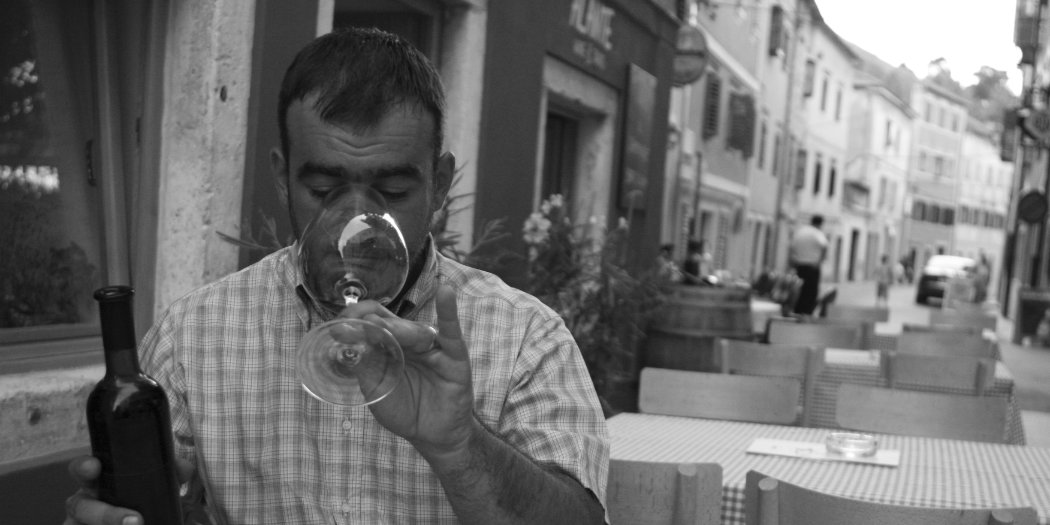
I visited with friends in 2015 when things were still booming albeit slightly more settled, for this epic photo. As always, it was an excellent lunch, the wines pairing wonderfully with the food. As was seen in “No Reservations”, while Alen was happy to serve the wines and be our host, Vesna still didn’t want to come out of the kitchen for a photo.
While I tasted the Bibich wines in the years after, it wasn’t until last year’s Croatia Report that I first encountered Alen’s son, Filip who had taken over winemaking and running the winery as Alen had, “retired”. Now of course I’m left wondering if Alen had health issues even back then, but whatever the case, the family had put in place a smooth handover to the new generation as Filip now has to contend with the next stage in Croatian wine: a changing market and a changed climate.
While I realize that in comparison to the recent death of winemaking legend, Michel Rolland, someone such as Alen Bibić will have a great deal less name recognition, but for his small corner of European winemaking, he put in place a great many changes that have led the region in a positive direction.
I’ll never forget all the meals, tasting, and talks I’ve had with Alen over the last two decades as he and the energy he exuded will be sorely missed.
My best wishes to the family and their future continuation of this generations-old winery.