Unlike most other alcohols, selling wine over the last half century has required not just branding, but a narrative, and despite being very aware of this, wine has never actually managed to fully control its own narrative.

You can see this when it was all fun and games being an excellent part of the Mediterranean Diet. Back then, wine was viewed as the ‘healthy’ booze for a healthy lifestyle. But once the bottomless mouth holes on The Socials, along with the some of the most corrupt/boring politicians in recent history started decrying wine (as well as alcohol in general) as ‘evil’, that whole narrative unraveled like silk lingerie, machine washed on the cotton cycle.

Thus, despite wine never being better made as well as very accessible to all levels of income, consumption of wine has been in a freefall ever since we emerged from the darkest days of the pandemic. Why? Because there was a huge boom in consumption, followed by a huge boom in production, following by everyone waking up and shaking off a collective hangover of isolation, consumption, and sourdough bread making, only to overcorrect more than a touch.

The response from many wineries has been confusion and frustration. This is then followed up with simply holding back stock that I suppose they’ll either eventually sell in the future, offload under ghost labels, or, in the worst-case scenario, distill into industrial alcohol.

When visiting wineries for my recent Rioja Report (where there was a millions-of-liters glut until much of it was distilled off in 2023), winemaker and owner of Sierra de Toloño, Sandra Bravo summed up the problem better than anyone I’ve talked to recently:

“I keep hearing from people who’ve been making wine and selling it for the last half century, seeing their winery pass through several generations, and who don’t know what to do now. There’s a rigidity in that they take a lot of time to change and if the market shifts, they can’t seem to shift with it. I built everything from the ground up and I know very well that when you’re confronted with any kind of problem, you adapt, you change, and you evolve.”

It’s quite clear that many wineries are failing to do that evolve bit, let along even starting to adapt despite the fact this massive reduction in wine consumption has been happening for the last three years and no, everyone shifting to white wine production isn’t any kind of solution.

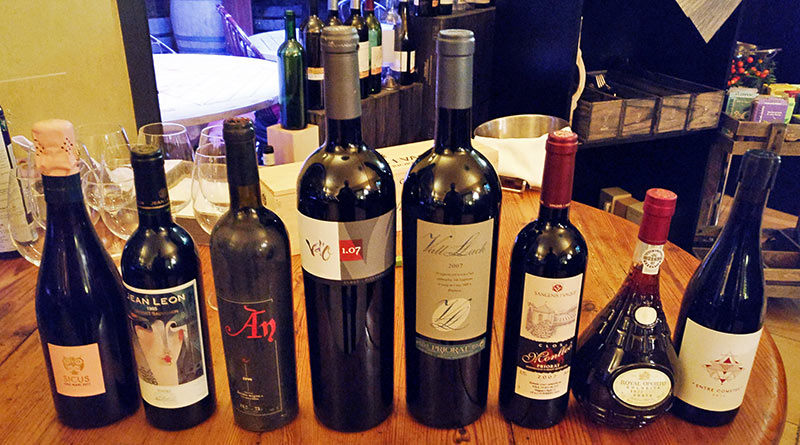
I was at another recent tasting with a winery in the Priorat region, who, despite producing lower-alcohol red wines, still has problems to sell. The owner asked me point blank as to what I saw for the future. I told him that the truth is, this moment isn’t like the Financial Crisis of 2008/9 which simply saw a ‘pause’ in pricier wine drinking, but people were still drinking. Now, there’s a narrowing of the other end of the tunnel unless a country like India (which I’ve long-believed to be a far more tremendous market for wine than China ever was) removes import tariffs and starts drinking more wine. Unfortunately, this reduction in the supply was perhaps long-needed to beat back those addicted to growth at all costs.

The most historic change the most

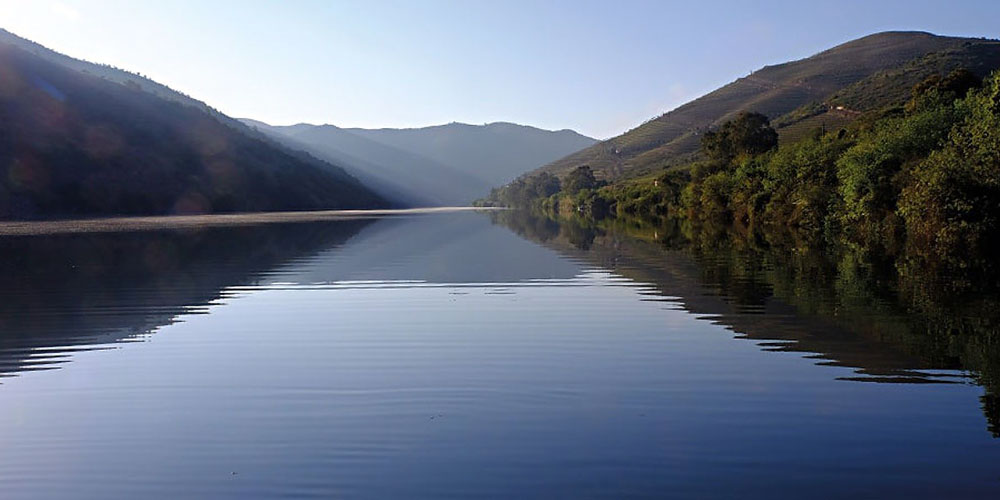
The, 10th edition of Alive Taste took place in Porto over the summer and I was happy to be invited as it’d been awhile since I was last in that wonderful wine city.

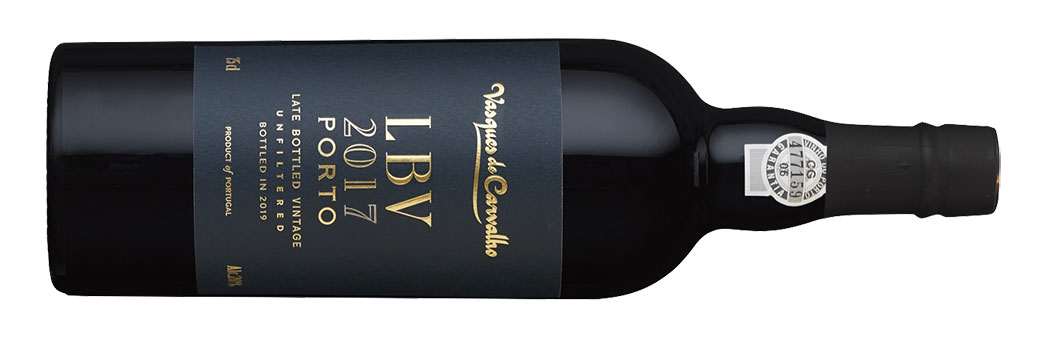
If you’re not familiar with the issues facing producers of Port wines, then let me summarize in one broad stroke: over the last three decades they’ve seen a 30% drop in sales. Much like what seems to be happening in the Post Mediterranean Diet Boom, Port producers saw their own boom in production from the late 1980s to 1990s prior to this massive drop. Despite the sharp reduction in production, there are still millions of bottles of Port produced each year that need to sell, so producers have been working on what’s most important currently, adapting.

A producer like Kopke has seen some insulation to the drop in Port sales by diversifying their portfolio and by absorbing other Port houses as well as wineries producing unfortified Douro wines. They’ve also used their old warehouses in Vila Nova de Gaia to open the Kopke Tivoli, a five-star hotel with a tremendous view across the river to Porto proper as well as the Dom Luís I Bridge. The hotel and included amenities are absolutely impressive, but what caught my eye a great deal was a product just launched this year called, Kopke “On Ice”.

Make Port Refreshing Again

After an unseasonably-hot day in Douro, myself and the group I was with arrived to the hotel and stumbled, sweaty and slow, into velvety bliss of luxury. Before dinner, they set out a number of glasses, a few ice cubes at the bottom and a barman readily adding a slice of orange to each and then, measuring into a tumbler a splash of tawny-ish liquid from a frosted bottle.

Priscila Haddad, the wine educator for Kopke then proceeded to lead us in a toast and introduce Kopke “On Ice”. For all purposes, it’s a White Port, a segment of Port wines that’s something like 10% of the total production. It’s produced from local white grapes such as Gouveio, Rabigato, and Viosinho which I expect few to remember the names of as they’re very local to Portugal and especially the Douro Valley. It’s fortified–like all Port wines–and arrives to 19.5% ABV and seems some aging. I say that as it’s slightly darker in color than many White Ports, but definitely not deeply colored.

How else does the “On Ice” differ? In apparently much the same way as there’s a secret recipe for KFC, for this White Port, there is some aspect that gives it a more aromatic, forward character. What’s curious is that if you drink it straight, it tastes slightly subdued. If you add that magic wedge of orange chill it with ice, you arrive to something wholly different, lifted, and quite pleasing to drink.

The next level comes in making a Portonic (or P&T as I like to call them) out of the “On Ice”. There’s nothing new about this concept and it’s been around for over a half century. As to why people don’t drink more of them is beyond me. A Gin & Tonic is an absolutely transcendent drink, but the P&T is super fresh take and with half the alcohol for those looking to consume less. If using “On Ice” with a bit of tonic and that wedge of orange instead of a bit of lemon or lime, it has an exotic feel to it. It’s as if you’re existing 100 years previous, chugging up a river on a steam boat to exotic locals, not the least bit worried about the looming tropical illnesses—although surely the quinine in the tonic will save you, so drink more.

The little black dress of mixers

At the Alive Taste event the following evening in the hotel, Kopke had wisely (or more accurate to say, ‘dangerously’) set up a stand for “On Ice” drinks. I made use of several of them in the most classic form which is just a shot with orange peel, on ice, but the woman mixing the drinks said that the “On Ice” pretty much blends with anything. I took her word on this and wanted to try more.

Once back home, after initially slaking my thirst with P&Ts, I tried a Porthattan (?) by swapping out the “On Ice” for the Vermouth in a Manhattan. It worked a charm although I’d recommend the creaminess of Bourbon over the herbal-ness of Rye. Perhaps a Portgroni? Again, swapping out the Vermouth works well again, although I would probably change the 1+1+1 blend to be 1 Gin, 0.5 Campari, and 1.5 “On Ice” as it can run a touch bitter in the traditional blend of equal parts.

Suffice to say, it’s a mighty flexible addition to many drinks and has a wide range. While higher alcohol than most wines, you just drink a 60ml shot of it, not a whole glass, which also makes it lighter than alcohols such as Gin (again, try a P&T if you haven’t before), albeit the same as Vermouth. Overall, Kopke has managed to take what is this small segment white they produce and open up a whole new category while not cannibalizing their current sales of traditional Port wines. This is a noteworthy feat.

It’s not been an easy ride for the Port producers, but they’ve shown themselves to be willing to adapt and even change the entire concept of an alcoholic drink they’ve been producing for over three and a half centuries. It’s notable that they’ve taken the concept that Port is best had on fancy occasions, perhaps with a bit of Stilton, and turned it on its head—at least for the white Port. Red still needs a bit of work and Kopke isn’t the only one trying things as shown by the lean into cocktails when walking around Porto, especially in the Sandeman bar with a fine view to the river and sharing a pre-dinner drink with your mother and aunt, should you all be traveling together.

The less we change, the more we need it

An “On Ice” is not a fix all for every wine region in the world and producers still need to make less wine, at least for the time being. There’s admittedly something of a lateral move to all of this as well given that for each P&T made, a bottle of Gin potentially loses its wings, although a P&T is a far better drink than anything made with Seedlip, which is basically dirty water.

The idea to change and adapt still holds a great deal of merit, as if you don’t, you simply go extinct. That and working to affect long-lasting change holds potentially more success than what Wine Industry Barbie says doesn’t work which is, slapping new branding on old product or paying an influencer to toss up a couple of posts no one will remember…

Comments

Leave a Reply

This site uses Akismet to reduce spam. Learn how your comment data is processed.